
Teague could be freed at 18
Contrary to what at least two Oklahoma City television stations and another newspaper implied after he was sentenced last month to two life prison terms, convicted murderer Blaize Teague could be released from custody when he turns 18.
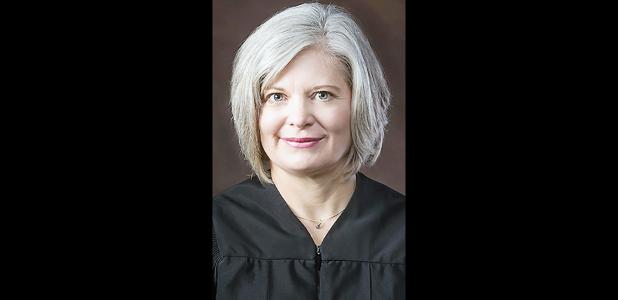
So says an opinion written by Associate District Judge Jill Weedon when she certified him as a “juvenile offender” one year ago.
“If certified as a YO and found guilty at trial, BT would be committed to the custody of the Office of Juvenile Affairs until the expiration of the sentence, until discharged by the court, or until he reaches eighteen (18) years of age, whichever occurs first,” Judge Weedon wrote. YO of course stands for Youthful Offender and BT for Blaize Teague.
And while it might be argued that he was not found guilty at trial, he did plead guilty Oct. 25 to first-degree murder, shooting with intent to kill, and first-degree burglary. His guilty pleas made a subsequent trial unnecessary.
The judge’s explanation cites Oklahoma Statute 10A, paragraph 2-5-212(A) and continues: “OJA could place him in a secure facility or other OJA facility, place him in a group home or community residential facility, or place him under community supervision.” OJA stands for Office of Juvenile Affairs.
Teague was sentenced by District Judge Doug Haught to life terms for the murder and shooting with intent to kill, and to 20 years in prison for the burglary. He was 14 when he broke into the Cordell home of Tammi Thomas and killed her with a shot to the head and seriously wounded her own 14-year-old son. A younger son escaped the carnage when he was shoved into a closet or other room by his older brother.
Weedon said a youthful offender may be placed back in the community only with court approval and his case must be reviewed annually by a judge. She said he may be transferred to the Oklahoma Department of Corrections only if he has done one of the following:
• After certification as a YO, seriously injured or endangered the life or health of another person by violent behavior;
• Escaped from a facility;
• Committed a new felony crime;
• Committed assault and battery on an employee of a juvenile facility while in custody of the facility;
• Caused disruption in the facility, smuggled contraband into it, caused contraband to be smuggled into it, or engaged in other types of behavior which has endangered the life or health of other residents or staff of the facility; or
• Established a pattern of disruptive behavior not conducive to the established policies and procedures of the program.
Judge Weedon said if a youthful offender reaches age 18 prior to expiration of his or her sentence, he or she will be returned to the sentencing court where the judge will have one of four options, as follows:
Return the child to OJA until the age of 18 years and 5 months to complete treatment;
Place him in Department of Corrections custody for the remainder of the sentence;
Place him on DOC probation; or
Discharge him from custody.
“An order transferring a YO to the Department of Corrections is deemed an adult conviction,” the judge wrote.
In this case she said the State (through District Attorney Angela Marsee and her staff) raised concerns that CT (shooting victim Christian Thomas who survived) will not be safe if BT is not behind bars in the adult system. “This is a valid concern,” she wrote, adding that she herself is not convinced that the public, including CT, would be adequately protected if BT were processed through the regular juvenile system. However, she added, “The Youthful Offender System offers sufficient safeguards for the public, and specifically CT and his brother.”
Addressing the likelihood of rehabilitation for Teague, Judge Weedon wrote that one of the doctors who evaluated him identified his intellect as a strength.
She added, “It appears that BT has the capacity to be rehabilitated if he will apply himself and actually correct his flawed thinking, outgrow his immaturity and primitive responses to stress, and take responsibility for his own actions.”
Medication could help correct depressive disorder with psychotic features, she wrote, adding: “It is reasonable to expect a 14-year-old with above average intelligence to be able to be rehabilitated within the facilities available in OJA.”
On the other hand, if placed in the adult penal system, she said there would be “no rehabilitation of a 14-year-old.”
In a conclusion, Judge Weedon wrote: “The charged crimes are violent, and this ruling in no way diminishes the seriousness of the crime or the impact it has had on the victims, the victims’ family, and the community. The defendant in this case is very young, and yet intelligent. He claims to have mental health issues. There is no question that he has impulse control issues, a very poor stress response, and shows traits associated with psychopathy.”
Summing up, she said, “If this 14-year-old is convicted, and can be rehabilitated, it should be done. If he cannot be rehabilitated, he should go to prison for a very long time. The Youthful Offender procedure . . . allows an opportunity for rehabilitation with the safety net of bridging to the adult system if the offender cannot or will not change. The Court denies the Motion to Certify as a Juvenile, but finds that Blaize Claude Eugene Teague should be certified as a Youthful Offender.”
Teague of course has turned 15 since that summation was written and in fact is only three to four months from turning 16.